How to Compare DUI Lawyers in Attleboro, MA

Facing a DUI charge can create uncertainty about your driver’s license, finances, reputation, and future. Choosing the right attorney is an important step toward understanding your legal options and preparing a defense. However, not every lawyer has the same experience, approach, or fee structure. Knowing how to compare DUI lawyers in Attleboro, MA, can help you make a more informed decision.

If you are searching for the Best DUI Lawyer in Attleboro MA, focus on relevant legal experience, communication, defense strategy, and transparency rather than relying on advertising claims alone.

1. Look for Experience in DUI and OUI Defense

In Massachusetts, driving under the influence is commonly addressed under the term Operating Under the Influence (OUI). These cases may involve questions about the traffic stop, field sobriety tests, breathalyzer results, and the procedures followed by law enforcement.

When comparing attorneys, ask how regularly they handle DUI or OUI cases and whether they have experience with circumstances similar to yours. A lawyer familiar with Massachusetts OUI laws can explain the charges, applicable procedures, potential consequences, and available legal options.

Rather than simply asking how many years an attorney has practiced, ask about their experience handling cases involving your specific concerns.

2. Evaluate Their Understanding of Local Court Procedures

Local legal knowledge can be valuable when preparing for a criminal case. An attorney familiar with Attleboro and the relevant Massachusetts court procedures can help you understand important deadlines, court appearances, and the general progression of your case.

Ask who will represent you in court, how your case will be prepared, and what you should expect at each stage. Your attorney should explain the process clearly without guaranteeing a particular result.

A qualified DUI defense lawyer should also help you understand whether separate Registry of Motor Vehicles (RMV) issues may affect your driving privileges and whether additional action is necessary.

3. Compare Defense Strategies and Case Preparation

Every DUI case has its own facts. A responsible attorney should review the available evidence before recommending a strategy instead of promising an outcome during an initial conversation.

Ask how the lawyer will evaluate the reason for the traffic stop, the officer’s observations, field sobriety testing, and any breath or blood test evidence. Depending on the circumstances, the attorney may also examine testing procedures, the reliability of evidence, and whether your legal rights were respected.

The goal is to understand how the lawyer plans to assess your case and identify legally supportable defense options. No attorney can guarantee that charges will be dismissed or reduced.

4. Understand Legal Fees Before Hiring

Attorney fees are another important factor when comparing a DUI lawyer in Attleboro, MA. Some firms charge a flat fee, while others may use different billing arrangements depending on the complexity of the case and the services required.

Request a written explanation of the fee structure before making a decision. Ask whether the quoted amount includes court appearances, negotiations, trial preparation, and other anticipated work. You should also clarify whether expert witnesses, testing, or additional proceedings could involve separate costs.

The lowest fee is not necessarily the best value. Consider the lawyer’s relevant experience, the scope of representation, and the quality of communication alongside your budget.

5. Check Communication and Client Reviews

Clear communication can make an unfamiliar legal process easier to navigate. During your consultation, notice whether the attorney listens carefully, answers questions directly, and explains complicated legal concepts in understandable language.

Ask how frequently you can expect updates, whether you will communicate directly with the attorney, and how urgent questions are handled. You should know whom to contact when a court date, deadline, or new development arises.

Online reviews may provide additional insight into responsiveness and professionalism. Read several reviews rather than relying on a single positive or negative comment. Reviews should supplement, not replace, your own assessment of the attorney.

6. Ask the Right Questions During Your Consultation

Before hiring a lawyer, prepare a short list of questions to help you compare your options. Consider asking:

  • How much of your practice involves DUI or OUI defense?
  • What issues would you examine first in my case?
  • What possible legal and driver’s license consequences should I understand?
  • What defense options may be available based on the evidence?
  • What is included in your fee agreement?
  • Who will handle my case and keep me informed?

The answers can help you assess whether the lawyer understands your concerns and provides realistic, case-specific guidance.

Why Consider Singh Law 4 U for DUI Defense?

If you are looking for legal representation in Attleboro, Singh Law 4 U offers criminal defense services, including DUI and OUI-related representation. The firm’s website provides information about its practice areas and consultation options.

When contacting the firm, discuss the circumstances of your case, ask about the attorney’s experience with similar matters, and clarify the proposed representation and fees. These steps can help you decide whether the firm’s approach aligns with your needs.

Learn more at singhlaw4u.com or contact the firm to discuss your situation and available options.

Make an Informed Decision About Your DUI Defense

Comparing DUI lawyers involves more than searching for the highest-rated attorney or the lowest fee. Relevant experience, a clear defense strategy, transparent billing, effective communication, and familiarity with Massachusetts procedures are all important considerations.

If you are facing a DUI or OUI charge in Attleboro, seek legal guidance promptly so you can understand applicable deadlines and make informed decisions. Taking the time to compare qualified attorneys can help you choose representation that fits your circumstances.
How Criminal Lawyers Challenge Weak Prosecution Evidence

When facing criminal charges, the strength of the prosecution’s evidence can have a major impact on the direction of a case. The fact that someone has been accused of a crime does not automatically establish guilt. The prosecution must build its case with evidence that supports the specific charges beyond the required legal standard.

A Criminal Defense Lawyer Attleboro MA can examine that evidence closely to identify weaknesses, inconsistencies, procedural problems, and unsupported conclusions. At Singh Law 4 U, careful preparation and evidence review can help a defendant understand the case against them and the legal options available.

Reviewing How the Investigation Was Conducted

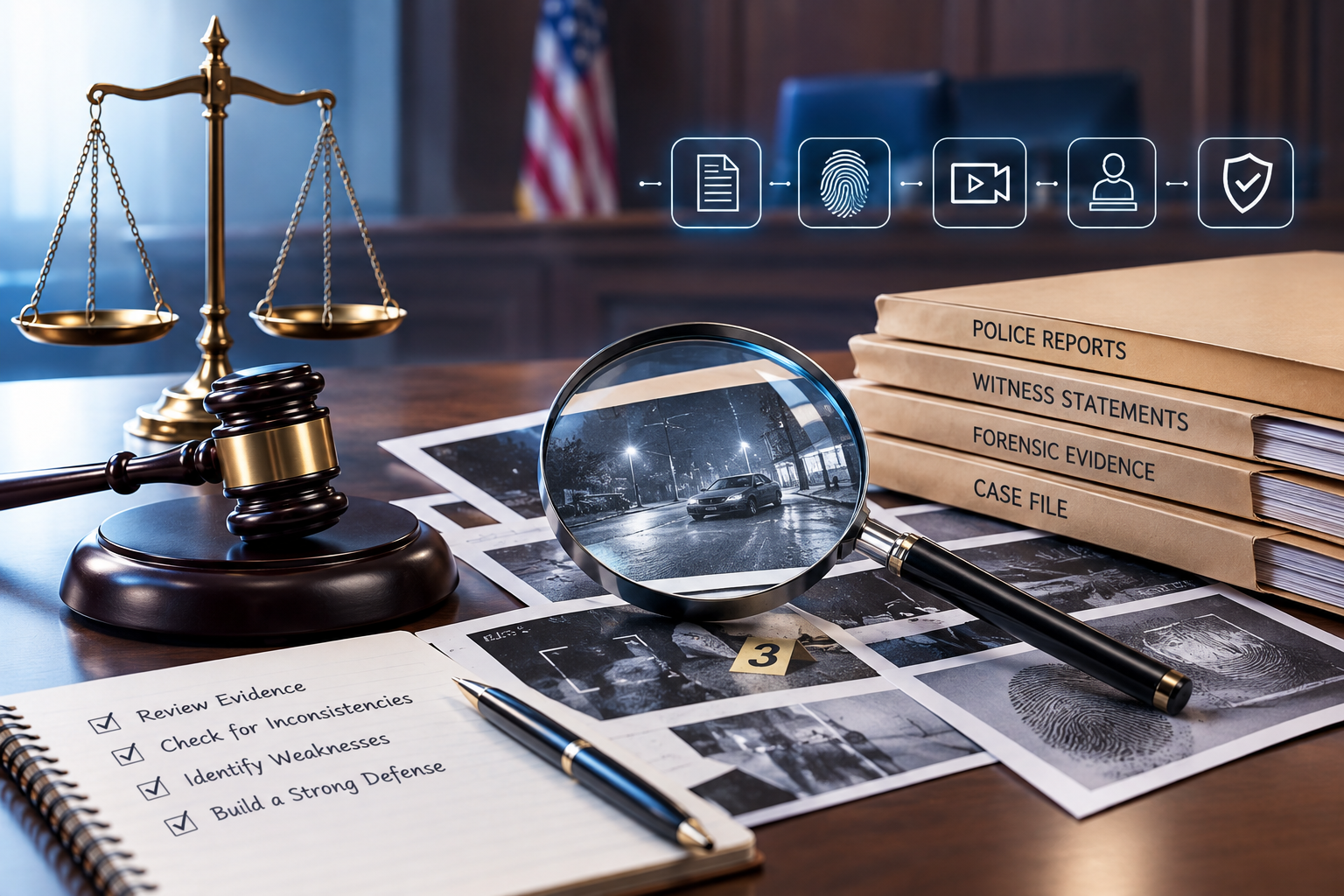
One of the first steps in challenging weak evidence is understanding how investigators obtained it. A defense attorney can review police reports, interviews, photographs, surveillance footage, digital records, and other materials connected to the investigation.

The attorney may look for gaps in the investigation or differences between what witnesses initially reported and what later appeared in official records. Even small inconsistencies can become important when they affect a key part of the prosecution’s theory.

Understanding the complete investigation also allows defense counsel to determine whether the prosecution’s evidence tells the entire story.

Testing the Reliability of Witness Statements

Witness testimony can influence how a jury understands a criminal allegation. However, witnesses may remember events differently, misunderstand what they observed, or provide accounts that change over time.

A criminal defense lawyer can compare a witness’s statements with police reports, recordings, physical evidence, and other available information. During cross-examination, the attorney may question inconsistencies, limitations in observation, or details that do not match the available evidence.

The goal is to make sure testimony receives careful scrutiny rather than being accepted without examination.

Examining Physical and Digital Evidence

Evidence can come in many forms. Police may rely on photographs, video recordings, fingerprints, electronic communications, location information, documents, or other physical evidence.

A defense attorney can investigate how the evidence was collected, preserved, analyzed, and presented. Questions about authenticity, accuracy, relevance, or the circumstances surrounding collection may become important.

For example, a video recording may not show the entire incident. A digital record may require additional context. Physical evidence may also need to be properly connected to the alleged offense before it can meaningfully support the prosecution’s position.

Looking for Problems With Evidence Collection

The circumstances surrounding evidence collection can matter just as much as the evidence itself.

A Criminal Defense Lawyer Attleboro MA may examine whether law enforcement followed applicable legal procedures when conducting a search, taking property, questioning a suspect, or obtaining certain records.

When evidence was obtained improperly, defense counsel can evaluate whether there are legal grounds to challenge its admission or use. The appropriate approach depends on the facts and legal issues involved in the particular case.

Identifying Missing Links in the Prosecution’s Theory

Sometimes the prosecution’s case depends on connecting several separate facts. The defense can examine whether those facts actually establish the conclusion the prosecution wants the jury to reach.

For example, evidence showing that a person was present at a location does not necessarily establish what that person did there. Similarly, possession of an item does not automatically explain how or why the person obtained it.

A defense lawyer can separate established facts from assumptions and examine whether the prosecution has sufficient evidence to connect each important part of its case.

Challenging Evidence That Lacks Context

Evidence can appear convincing when presented without the surrounding circumstances. A skilled defense attorney looks beyond isolated statements or individual pieces of evidence.

At Singh Law 4 U, the defense process can involve examining the larger timeline, comparing different sources of information, and identifying facts that may provide a different explanation of the events.

This broader analysis can help reveal whether the prosecution’s interpretation is fully supported by the available evidence.

Building a Defense Around the Evidence

Challenging prosecution evidence does not necessarily mean disputing every fact. Effective criminal defense work requires identifying the issues that genuinely matter to the case.

A Criminal Defense Lawyer Attleboro MA can evaluate the charges, investigate the available evidence, identify potential weaknesses, and develop a defense strategy based on the specific circumstances.

Talk With Singh Law 4 U

Criminal allegations can have serious consequences, making it important to understand the evidence and legal issues involved as early as possible. Singh Law 4 U provides legal representation for individuals seeking assistance with criminal defense matters.

If you are searching for a Criminal Defense Lawyer Attleboro MA, contact Singh Law 4 U to discuss your situation and learn what legal options may be available to you.

Choosing a Criminal Defense Lawyer After an Arrest

An arrest can be confusing, stressful, and overwhelming. You may not know what will happen next, what your police report says, or how a criminal charge could affect your family, employment, driving privileges, or future. One of the most important steps after an arrest is understanding your legal rights and speaking with an experienced criminal defense attorney.

If you are searching for the Best Criminal Defense Lawyer in Attleboro MA, it is important to look beyond advertisements and focus on the attorney’s experience, communication, knowledge of Massachusetts criminal procedure, and ability to carefully evaluate the facts of your case.

Understand What Happens After an Arrest

In Massachusetts, an arrested person may be taken through booking and then brought before the court for arraignment, depending on the circumstances of the arrest.

At arraignment, the charges are addressed and issues such as release conditions and counsel may be considered.

You also have important legal rights. Massachusetts court resources explain that a person charged with a crime has the right to remain silent and the right to have an attorney present during questioning.

Because early decisions can affect the direction of a criminal case, contacting a criminal defense lawyer promptly can help you understand what comes next.

Review the Police Report Carefully

A police report can contain important information about the allegations, the circumstances surrounding an arrest, statements attributed to witnesses, and the officer’s description of events.

Massachusetts criminal procedure specifically provides for police statements or police reports in connection with certain criminal complaints and arrests.

A criminal defense attorney should carefully examine the report rather than simply accept every statement in it as an established fact. An attorney may compare the report with other available evidence, identify inconsistencies, examine the timeline, and determine whether additional investigation is appropriate.

This is one reason choosing an experienced criminal defense lawyer in Attleboro MA can be important when facing criminal allegations.

Look for Experience With Your Type of Charge

Not every criminal case is the same. A person facing an OUI charge may have different legal issues from someone facing a felony allegation, domestic assault charge, restraining-order violation, or another criminal offense.

When comparing attorneys, ask whether they regularly handle cases similar to yours. Experience with the relevant type of charge can help an attorney understand the procedural issues, evidence, potential defenses, and court process involved.

Singh Law 4 U identifies criminal defense as a core practice area and also handles matters including OUI, DUI, felony defense, domestic assault, and restraining-order violations.

Ask How the Attorney Will Evaluate Your Case

During an initial consultation, ask the attorney how they would approach the case based on the information currently available.

Useful questions may include:

  • What documents should I provide?
  • What information should I avoid discussing with others?
  • What does the police report say about the allegations?
  • Are there inconsistencies that need further investigation?
  • What happens at my next court appearance?
  • What evidence should be preserved?
  • What are the possible legal paths from this point?

The goal is not to receive promises about a particular result. Instead, you should leave the consultation with a clearer understanding of the process and the issues that may need attention.

Consider Communication and Accessibility

Criminal cases often involve deadlines, court appearances, legal documents, and decisions that require timely attention. Communication should therefore be an important consideration when selecting a lawyer.

Ask how you will communicate with the attorney, who will handle your questions, and how you can provide documents or updates about your case.

Massachusetts court guidance explains that an attorney can help a defendant understand their rights, evaluate the strengths and weaknesses of a case, develop a defense strategy, and navigate court procedures.

Local Knowledge Can Matter

If your case is in or around Attleboro, an attorney familiar with Massachusetts criminal proceedings and the local court system can help you understand the practical steps involved.

Singh Law 4 U is located at 89 N Main Street in Attleboro, Massachusetts, across from the Attleboro courthouse, and its website identifies Attleboro as a primary service location.

Schedule a Criminal Defense Consultation

If you have been arrested or charged with a crime, do not assume that the police report tells the entire story. The report is one part of the case, and an attorney can help you understand the allegations, available information, and potential legal issues.

If you are looking for a Best Criminal Defense Lawyer in Attleboro MA, Singh Law 4 U provides criminal defense representation in Attleboro and can help you understand your legal options after an arrest.

Contact Singh Law 4 U to discuss your situation and learn what steps may be appropriate for your case.

How Criminal Defense Attorneys Review Police Reports

When someone faces criminal charges, a police report often becomes one of the first documents a defense attorney examines. The report may describe what officers saw, what witnesses said, how the investigation developed, and what evidence police collected.

A Criminal Defense Attorney Attleboro MA does not simply accept everything written in a police report as fact. Instead, the attorney carefully reviews the information, compares it with other evidence, and looks for inconsistencies, missing details, and legal issues that could affect the case.

Why Police Reports Matter in a Criminal Case

Police reports can provide important information about the events that led to criminal charges. They may identify witnesses, describe alleged offenses, document evidence, and explain why officers took certain actions.

However, a police report usually presents the investigating officer’s account of events. It does not necessarily include every detail or every perspective. A defense attorney reviews the report with that distinction in mind.

Understanding what the report says helps an attorney determine how the prosecution may approach the case and what areas require further investigation.

Reviewing the Timeline of Events

One of the first things a defense attorney examines is the timeline.

The attorney may review when officers arrived, when they spoke with witnesses, what they observed, when evidence was collected, and when an arrest occurred. The attorney can then compare that timeline with other available evidence.

For example, surveillance footage, photographs, phone records, body-camera footage, or witness statements may provide additional information about what happened.

Even a small difference in timing can become important when it conflicts with another piece of evidence. Building an accurate timeline allows the defense attorney to understand the case more clearly.

Identifying Inconsistencies in the Report

A careful review can reveal inconsistencies between the police report and other evidence.

A defense attorney may compare the report with witness statements, photographs, recordings, physical evidence, and other documents. The attorney may ask whether different accounts describe the same event consistently.

The review may focus on questions such as:

  • Does the report accurately describe the alleged incident?

  • Do witness statements match the officer’s account?

  • Does physical evidence support the statements?

  • Are important facts missing from the report?

  • Did the officer document all relevant observations?

  • Do photographs or recordings provide additional context?

The attorney can use these questions to identify areas that need closer examination.

Examining Probable Cause

Probable cause can play an important role in a criminal case. A defense attorney may examine the facts that officers relied on when seeking an arrest or criminal complaint.

The attorney considers whether the documented facts support the allegations and whether the available information connects the accused person to the alleged offense.

This review does not mean that every difference in a police report automatically changes the case. Instead, the attorney evaluates the significance of each fact within the larger legal and factual circumstances.

Comparing the Police Report With Other Evidence

A police report represents only one part of a criminal case. A defense attorney may also review discovery materials and other evidence provided during the legal process.

These materials can include photographs, videos, recordings, witness statements, physical evidence, and investigative records.

Comparing these materials with the police report can provide a more complete picture of the investigation.

For instance, a video recording might provide details that the written report does not mention. Similarly, a witness statement might contain information that differs from the officer’s description.

This comparison helps the attorney determine which facts require additional investigation.

Looking for Missing Evidence

A defense attorney may also consider what investigators did not collect or investigate.

For example, the attorney may ask whether officers identified potential witnesses, reviewed available surveillance footage, collected relevant physical evidence, or followed appropriate investigative procedures.

Missing evidence does not automatically prove that an investigation was improper. However, unexplained omissions may raise questions that deserve further examination.

A thorough review therefore considers both the information contained in the police report and the information that may be absent.

Checking Statements and Witness Accounts

Witness statements can significantly influence a criminal case. Attorneys carefully examine who provided each statement, when the statement was made, and whether the account changed over time.

A defense attorney may compare initial statements with later statements to identify meaningful differences.

The attorney can also examine whether a witness had an opportunity to observe the event clearly and whether other evidence supports the witness’s account.

This process helps the defense evaluate the reliability and significance of witness information.

Reviewing Searches, Arrests, and Evidence Collection

Depending on the circumstances, a defense attorney may examine how police obtained evidence.

The attorney can review the circumstances surrounding searches, seizures, arrests, questioning, and evidence collection. If the case raises constitutional or procedural issues, the attorney may determine whether those issues require further legal analysis.

The specific significance of these issues depends on the facts of each individual case.

Using the Review to Develop a Defense Strategy

After reviewing the police report and other evidence, a defense attorney can identify the major factual and legal issues in the case.

The attorney may determine that certain witnesses need further investigation, additional records should be obtained, or particular evidence requires closer examination.

The purpose of reviewing a police report is not simply to find a mistake. The larger goal is to understand the prosecution’s allegations, evaluate the available evidence, and develop an appropriate defense strategy.

Speak With a Criminal Defense Attorney in Attleboro, MA

If you or someone you know is facing criminal charges, understanding the police report can be an important part of preparing a defense.

A Criminal Defense Attorney Attleboro MA can review the report, compare it with available evidence, identify potential inconsistencies, and determine which issues may require additional investigation.

Singh Law 4 U helps individuals understand their legal options and navigate criminal defense matters in Attleboro and throughout Massachusetts. Every criminal case has its own facts and circumstances, so obtaining advice about your specific situation can help you understand the legal process and available options.

Can a Criminal Attorney Challenge Police Evidence?

When someone is facing criminal charges, evidence collected by the police can play an important role in the prosecution’s case. But police evidence is not automatically admissible simply because law enforcement collected it.

Depending on the circumstances, a Criminal Defense Attorney in Attleboro, MA may challenge evidence when legal concerns arise about how someone obtained, handled, or presented it.

At Singh Law 4 U, understanding the source and reliability of evidence is an important part of preparing a criminal defense.

If you are facing criminal charges in Attleboro or the surrounding Massachusetts communities, an attorney can review the circumstances of the investigation and determine whether a challenge to the evidence may be appropriate.

What Types of Police Evidence Can Attorneys Challenge?

Police investigations can produce many different types of evidence, including physical items, photographs, video recordings, electronic data, statements, witness information, and evidence obtained during a search or traffic stop.

A criminal defense lawyer may examine whether police followed applicable constitutional requirements and Massachusetts criminal procedure rules when obtaining that evidence.

For example, questions may arise about:

  • Whether police had the required legal justification for a search or seizure
  • Whether a warrant was properly obtained or executed
  • Whether a traffic stop or detention was legally justified
  • Whether a person’s statements were obtained lawfully
  • Whether officers followed required procedures
  • Whether evidence was properly documented and preserved
  • Whether the prosecution has provided required discovery

The specific circumstances of the case matter, and not every procedural error automatically means evidence will be excluded.

Can an Attorney Ask the Court to Suppress Evidence?

Yes. In appropriate circumstances, a defense attorney can file a motion to suppress evidence asking the court to prevent certain evidence from being used.

Massachusetts Rule of Criminal Procedure 13 governs pretrial motions and requires motions to state the grounds on which they are based.

Massachusetts Superior Court Rule 61 also specifically addresses motions to suppress evidence and requires them to be in writing, supported by stated facts, and verified by affidavit, subject to the applicable procedural rules.

A suppression motion may focus on the legality of the police conduct that produced the evidence. The court then considers the applicable facts and law before deciding whether the evidence can be used.

Common Reasons Police Evidence May Be Challenged

1. Unlawful Search or Seizure

Searches and seizures can raise constitutional issues. A defense attorney may examine why officers searched a vehicle, home, person, phone, or other property and whether the search was legally justified.

2. Problems With a Traffic Stop

A traffic stop may also be reviewed when the circumstances raise questions about the officer’s legal basis for stopping or detaining someone. The details of what happened before, during, and after the stop can be important.

3. Statements Made During Police Questioning

Statements made to police may become important evidence in a criminal prosecution. An attorney can examine the circumstances surrounding questioning, including whether law enforcement followed constitutional protections and applicable legal requirements.

4. Evidence and Chain of Custody

Physical or digital evidence may also undergo examination for documentation, preservation, identification, and handling issues. These questions can affect how attorneys present and challenge evidence in court.

What Happens During a Suppression Hearing?

A suppression hearing is different from the criminal trial itself. The court may consider how police obtained the challenged evidence and whether they satisfied the applicable legal requirements.

Massachusetts law provides procedures for pretrial motions, including motions seeking suppression or other appropriate relief. Depending on the case, the parties may present legal arguments and supporting factual materials to the court.

The result depends on the specific facts, the evidence presented, and the applicable law. If a court determines that particular evidence should be suppressed, the prosecution may not use that evidence in the same way at trial.

Why Local Legal Representation Matters in Attleboro, MA

Criminal cases can involve detailed questions about police reports, searches, traffic stops, statements, warrants, discovery, and other evidence.

Working with a Criminal Defense Attorney in Attleboro, MA can help you review these issues in the context of Massachusetts law and the facts of your individual case.

At Singh Law 4 U, individuals facing criminal charges in Attleboro, North Attleborough, and surrounding communities in Bristol County can seek legal guidance regarding their defense options.

Can Courts Always Exclude Police Evidence?

No. Challenging evidence does not automatically mean that a court will exclude it. The defense generally needs a legally recognized basis for the challenge, and the court makes the final determination.

Massachusetts criminal procedure also contains specific deadlines and procedural requirements for pretrial motions, so timing can matter.

Speak With a Criminal Defense Attorney in Attleboro, MA

If you have arrested or charged with a crime, understanding the evidence against you can help you build an effective defense strategy.

A Criminal Defense Attorney in Attleboro, MA can review the circumstances of the investigation, identify potential evidentiary issues, and explain the legal options available in your situation.

Singh Law 4 U serves clients in Attleboro and surrounding Massachusetts communities. If you are concerned about police evidence or how police obtained it in your case, contact the firm to discuss your circumstances and potential legal options.