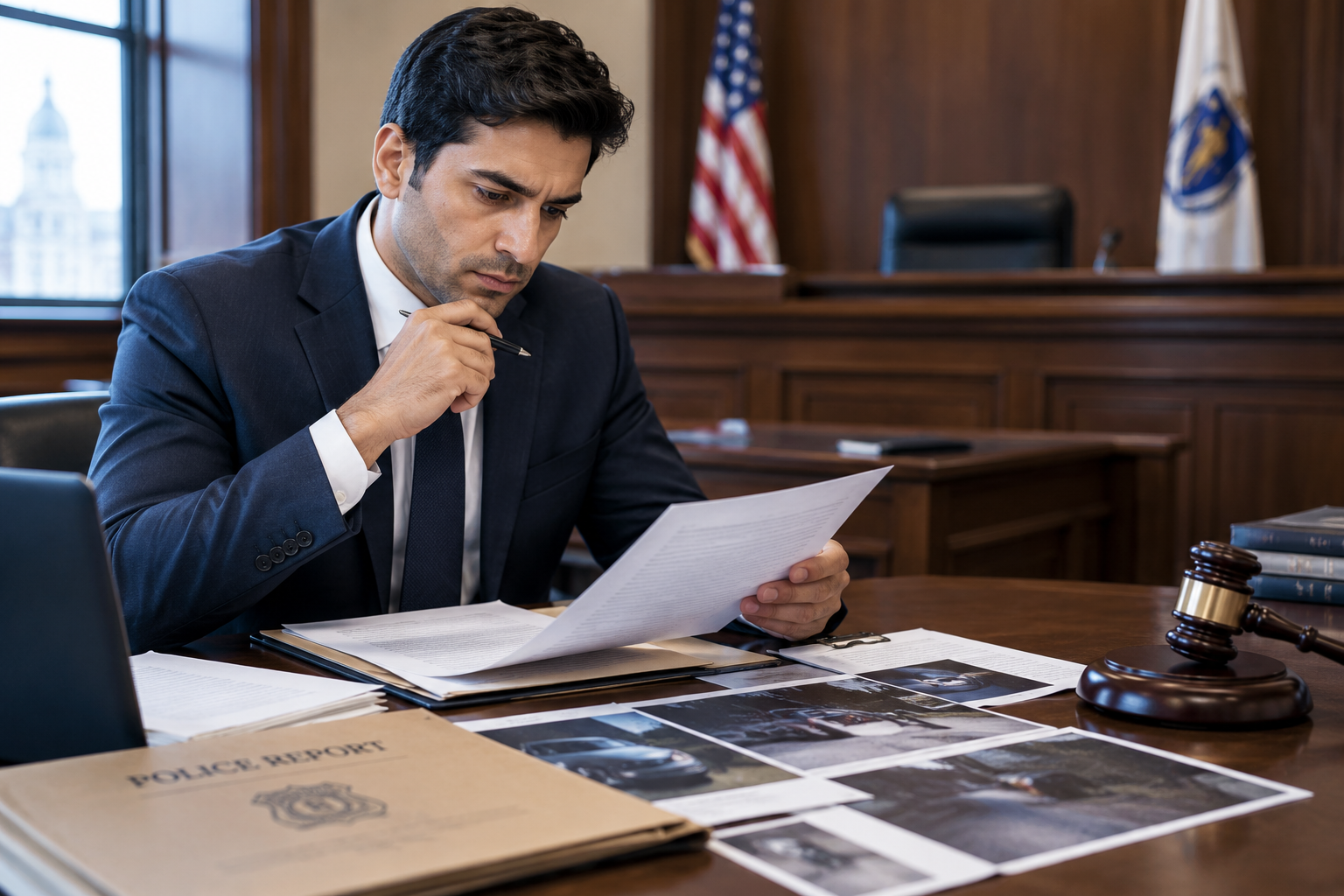
OUI Arrest on Private Property—Is It Defensible?

- Singh Law 4 U
- August 5, 2025
In Massachusetts, OUI stands for operating under the influence, which is also known as driving under the influence. An OUI charge applies when one operates a motor vehicle with a blood alcohol concentration of 0.08% or higher—or when their driving ability is substantially impaired by drugs or alcohol.
What many people don’t realize: these laws apply even when a vehicle is on private property, not just on public roads. However, if you face charges with something like this, contact an OUI lawyer in Attleboro, MA, ASAP.
Can You Be Charged with OUI on Private Property?
You might think that if you’re on private property—like your driveway, a parking lot, or a rural field—state OUI laws don’t apply. That’s not always true. Massachusetts law states that OUI applies to anyone operating a vehicle under the influence of alcohol or drugs on any “way or place” where the public has access.
This means:
-
Parking lots (even at private businesses)
-
Residential driveways (if accessible to the public)
-
Private roads (if used by others, like in apartment complexes)
If the area is open to public use, police can arrest you for OUI. This is because the legal language often emphasizes the operation of a vehicle, not just its location. So yes, driving while under the influence—even on private property—can still trigger serious consequences. However, an experienced OUI lawyer in Attleboro, MA, can challenge whether the location truly qualifies under the law.
Why Location Matters (and When It Might Not)

Situations with higher risk of enforcement:
-
If you are in a public-facing area of private property
-
If you are seen by law enforcement or security, especially in cases with unclear boundaries between public and private space.
Situation with Potential Leeway
-
When you are clearly on private, enclosed property—say, your own large farm or garage—without public access.
-
When you are not operating a vehicle at all.
-
If the vehicle is off and stationary and you are not actively driving, those details could be pivotal in a defense.
Defense against an OUI arrest on private property
Just because you were arrested doesn’t mean you’ll be convicted. A skilled attorney can argue:
1. Lack of Public Access
If the property was truly private (e.g., a gated home driveway with no public entry), the OUI charge may not hold. Your lawyer can investigate whether the prosecution can prove the area was open to the public.
2. No Actual Operation of the Vehicle
Police must prove you were operating the vehicle. If you were sitting in a parked car with the engine off, your attorney might argue you weren’t driving.
3. Improper Police Conduct
-
No Probable Cause—Did the officer have a valid reason to approach you?
-
Illegal Entry—Were you on private property where police needed permission to enter?
-
Faulty Field Sobriety Tests—These tests can be unreliable and subjective.
4. Challenging the Evidence
Breathalyzer and blood test results can be disputed if procedures weren’t followed correctly.
Additional defenses to consider
-
Even if the location is deemed a public way, other defense strategies may still apply:
-
If the police lacked reasonable suspicion or probable cause to stop your vehicle, any evidence gathered subsequently might be inadmissible.
-
FSTs (Contesting Field Sobriety Tests) are subjective and can be influenced by various factors. An attorney can challenge their proper administration and the officer’s interpretation of your performance.
-
The accuracy and admissibility of breathalyzer tests can be challenged based on calibration, maintenance, and proper procedure adherence.
-
If you were not actually driving or in physical control of the vehicle (e.g., sleeping in a parked car with the engine off), you might be able to argue against the “operation” element.
Why You Need a Local Expert: OUI Lawyer in Attleboro, MA

When it comes to navigating an OUI arrest—especially in murky scenarios like private property—you want a lawyer who knows the local courts, prosecutors, and precedents. A seasoned OUI lawyer in Attleboro, MA, can:
-
Scrutinize police procedures and test accuracy.
-
Analyze whether your rights were protected throughout the stop or arrest.
-
Build a personalized legal strategy tailored to your unique circumstances.
-
Having localized legal experience can lead to reduced charges, lighter penalties, or even case dismissal.
What Should You Do If Arrested for OUI on Private Property?
If you are arrested for OUI on private property in Massachusetts, it’s crucial to remember your rights and act strategically. You have the right to remain silent and to an attorney.
According to law, clearly and politely state your intention to remain silent and request legal representation immediately upon arrest. Avoid answering questions or engaging in discussions with law enforcement without your attorney present, and do not sign any documents without their review.
While remaining cooperative, do not resist the arrest, and as soon as possible, document all details of the arrest, including the date, time, location, officers involved, and any specific interactions or questioning.
Final Thoughts
An OUI arrest on private property doesn’t automatically mean a conviction. With the right legal strategy, you can challenge the charges effectively. If you’re facing OUI charges, don’t wait—contact a knowledgeable OUI lawyer in Attleboro, MA today to explore your defense options.